What's Old Is New Again
Joys of teaching introductory music courses

“Let it Be is a great song- it’s a shame more people don’t know it.” This was the impression that the famed Beatles song left on one of my students at the CUNY Baruch choir two weeks ago. Yes, it’s a direct quote. The remark wasn’t sarcastic, but rather, the earnest expression of a young person encountering (what he believed) to be a hidden treasure that spoke directly to his life’s experience. I was deeply moved by his immediate instinct to share what had profoundly impacted him with others, knowing at a deep, subconscious level that all people would also benefit from the empowering message of the song and its stable chord progression.
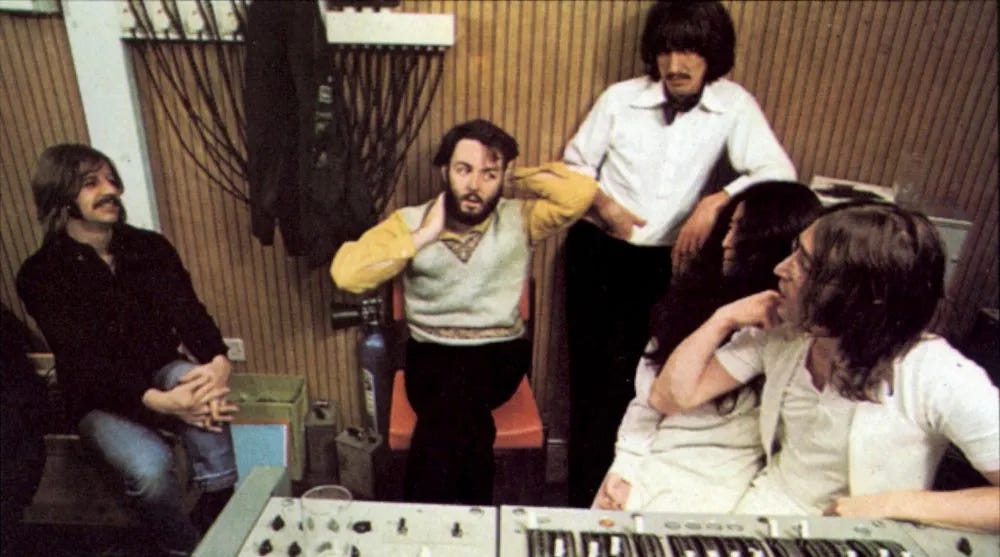
The choir at CUNY Baruch is largely made up of students who have no prior musical education. The combination of long hours scrolling social media, limited exposure to performing music in public school settings, and limited intergenerational interactions, all residual effects of the COVID-19 lockdowns, pose a few challenges as a music educator. Each semester I try to select tunes that I assume the students may be familiar with to facilitate quicker music literacy. The assumptions I make in terms of repertoire have almost always been wrong and what a gift it is! For many of these tunes, I can’t remember the first time that I heard them. They have always existed in my life. Now, I am reverted to a beginner’s mind through the reactions of my students. We have sung songs ranging from the Beatles classic Let it Be, jazz standard Bye Bye Blackbird and Mozart’s Dona Nobis Pacem. Each one is a new world for the students, something that they didn’t know was possible.
More interestingly, the music moves each individual in a different way. Some students make remarks about the lyrics first, others identify with the rhythm, others feel moved by the context in which the song was written. When we began working on Bye Bye Blackbird, we listened to a few different recordings of the standard. First was Etta Jones, followed by Frank Sinatra, and subsequently Ringo Star’s rendition. One student asked me the following question: “If they are all singing the same song, why does each recording sound different?” As someone who has been steeped in music for so long, this was a question that had many different answers. I tried to put myself in her shoes. I could have poured on about rhythm, timbre, harmony, orchestration or any other music theory term under the sun, but the actual reason is far simpler and much more human. This student was learning that each artist has unique expressive skills. She learned that each audience member has unique tastes. She was learning empathy and to appreciate artistic differences.
It is a profound privilege to have students feel safe enough to come to me with these big questions. There is no more rewarding experience as an arts educator than seeing students’ eyes light up with a moment of connection to the world around them. None of my students are music majors. Their majors include business, psychology, accounting, biology and marketing. However, their lives are being enriched by their participation in an artistic endeavor. For some, it is expanding a cultural vocabulary. For others, it is something to lean on during the stress of studying for classes. For all of them, it is the start of interacting with the world around them in a different way, hopefully the start of a life long journey.
(PS, all the songs mentioned are linked in the essay, the Ringo Starr version of Bye Bye Blackbird is an extra special treat).